Care & Transport
When bringing an animal in for taxidermy it is ideal to have the head and cape still intact as one. If you are or will be in a pack scenario (for example) where caping the head is necessary for transport, please give us call for information to ensure the best outcome on your taxidermy. If you are planning a hunt and would like information on skinning and care, please give us a call. It is important to keep animals cold and dry. Heat and moisture cause the biggest issues with animals/birds not being suitable for taxidermy. If you will be delayed more than a day or two, freezing the animal is best
Harvest Tags & Identification
All animals/birds must be accompanied by the proper harvest tags, identification, and documentation required by applicable state and federal wildlife regulations. Hunting license, hunter identification, and any required permit information will be logged and must follow the animal/bird throughout the taxidermy process. All animals/birds must have been legally harvested, possessed, tagged and documented in accordance with applicable state and federal wildlife laws.
Turns & Poses
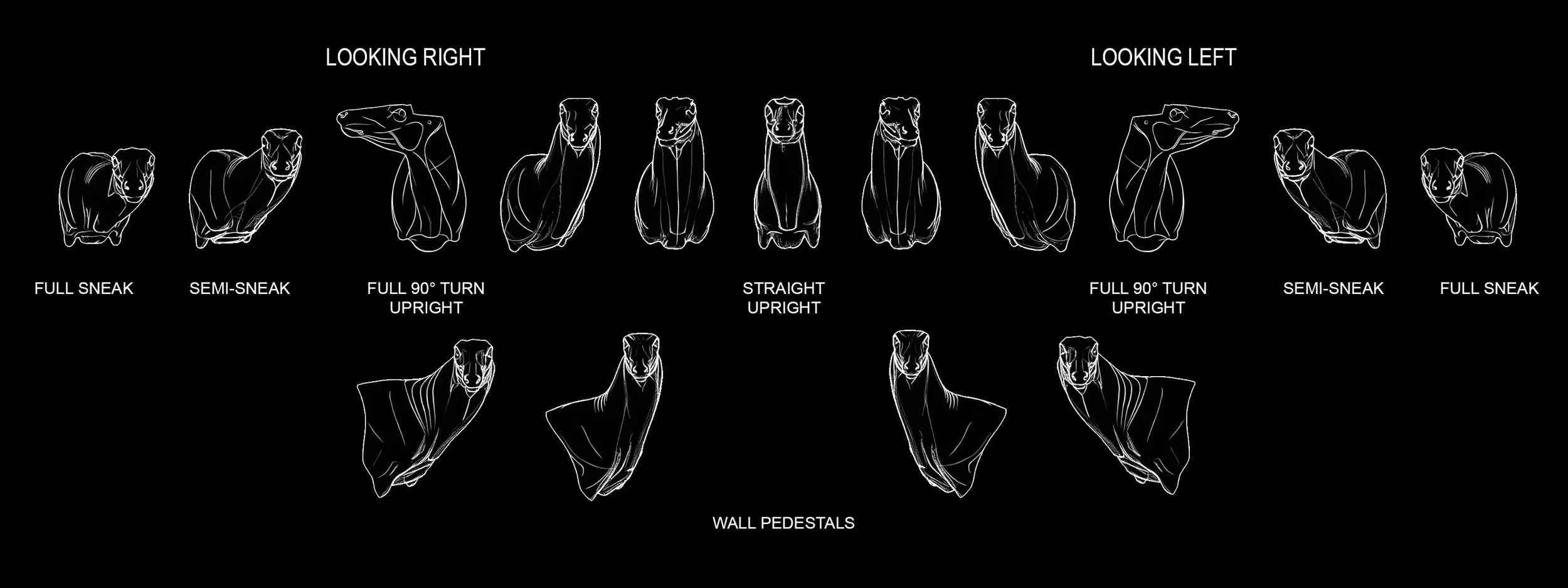
Choosing a pose for your animal isn’t always easy. For Whitetail it seems the possibilities are endless, while for other animals there are a very select few poses to choose from. The whole looking left verse looking right decision can sometimes be confusing as well. In general, it’s preferred to not have the animal looking into a wall, but rather into the open side of a space. However, sometimes the more interesting side of the antlers or horns can dictate the preferred direction of turn. No matter what, choosing a pose for your animal is the starting point for your taxidermy. Below is a very general guide to basic poses and direction of turns. There are many more possibilities, especially for whitetail and a form can always be customized. This diagram will hopefully provide a helpful jumping off point for making your decision on how you would like your animal to be posed.